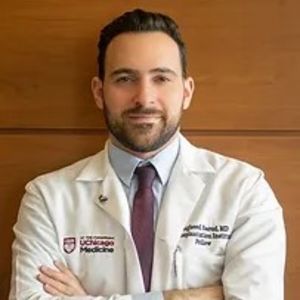
The University of Chicago offers a two-year ASTS-approved transplant fellowship. We train 1 fellow/year, and upon completion, fellows are certified in kidney, liver, and pancreas transplantation, as well as donor nephrectomy. In the 2025 calendar year, our team performed 210 kidney transplants, 88 liver transplants, 15 pancreas transplants, and 36 islet transplants.
Surgical Procedures- Volume by Fiscal Year
2026
2025
2024
2023
2022
Living donor liver transplants
14
10
9
9
12
Kidney
236
221
206
189
154
Liver
106
106
103
87
76
Pediatric Liver
4
7
8
4
6
Pediatric Kidney
9
6
5
6
3
Pancreas
11
20
12
15
14
Islets
45
34
24
19
12
The University of Chicago has served as a leading transplant institution for more than four decades. Members of our team have gone on to leadership positions across the United States, and in the last ten years we have become one of the most innovative transplant centers in the nation. We offer exposure to both normothermic and hypothermic machine organ perfusion, perform donor nephrectomies via a single port technique and complex living donor liver transplantation through a small upper midline, process islets for transplant in-house, run a large animal xenoperfusion lab, operate the MARS system, and routinely perform complex concomitant procedures in renal transplant recipients and combined organ transplants (including heart/liver/kidney transplantation, which UChicago has performed half of the world’s experience). Of course, we also provide the high volume abdominal transplant case training in both pediatric and adult recipients that many centers do as well. We perform, on average, more than 300 abdominal transplants annually.
It is my belief that a proper transplant fellowship will produce generalist transplant surgeons, who are equally comfortable managing immunosuppression on outpatients as they are performing a liver transplant on a fulminant hepatic failure patient on pressors, MARS, CVVH, and the ventilator. It is my expectation that a graduate of our program will be ready for a faculty position as an all-organ transplant surgeon at any academic program in the United States. Our fellows are busy, and this is by design. They are fully immersed in the pre-, intra-, and post-operative care of all abdominal transplant patients. Most fellows complete the ASTS volume requirements for kidney, pancreas, liver, and procurements within their first year. Fellows should expect rigorous surgical and medical exposure to all aspects of kidney, liver, and pancreas transplantation as well as deceased organ procurement (donation after brain and cardiac death) and living donor nephrectomies/hepatectomies.
A true fellowship demands exposure to research, and fellows are expected to present clinical research nationally. Fellows attend one national transplant meeting annually in addition to the ASTS Fellows Symposium. The Transplant Institute supports travel to any meeting for which the fellow is presenting orally, in addition to these meetings.
Transplantation is complex, and two years is an exceptionally short time to master anything of consequence. Faculty involved in the fellowship have been selected for their dedication to the fellows, and my responsibility for the fellows’ education and well-being is taken seriously. My overarching goal is to train competent fellows who will be good partners and safe surgeons at the beginning of their faculty careers, fellows who recognize that surgery is hard, and learning is continual throughout a successful career.
If this sounds like a good fit for you, I look forward to meeting you in Chicago.
The medical center is located on the west side of the University of Chicago campus. The intellectual buzz of the University setting encourages energetic collaboration across disciplines. The establishment of a world class research hospital was a goal of President William Rainey Harper when the University was founded in 1890. In an 1897 convocation speech, he did “not have in mind...an institution which shall devote itself merely to the education of a man who shall be an ordinary physician,” he said, “but rather an institution...whose aim it shall be to push forward the boundaries of medical science,...one from which announcements may be sent from time to time so potent in their meaning as to stir the whole civilized world.” He would not have been disappointed.
Initially, the medical school was affiliated with Rush Medical College. The first University of Chicago Hospital was dedicated in 1927, and the first University of Chicago medical students matriculated that year. The present state-of-the art hospital, the Center for Care and Discovery, opened in 2013.
University of Chicago Transplant Program
The field of transplantation arguably started here when Alexis Carrel developed his technique of vascular anastomoses while working at the Hull Physiology lab in 1904. The work earned him the Nobel Prize in 1912. It was the first time this prize was won by a surgeon.
The entire field of living donor liver transplantation started here as well. Although Dr. Christoph Broelsch performed the first segmental liver transplant from a deceased donor in 1984 while at the University of Hannover. He performed the first US reduced size liver transplant (1985) as well as the first US split-liver transplant (1988) while at the University of Chicago. This experience served as the basis for the first successful living donor liver transplant in the world in 1989. The team also performed the first liver transplant from an unrelated living donor in 1993. This procedure is now commonly performed worldwide.
Such contributions were not limited to liver transplantation. Paired-kidney exchange (the transplant chains which are widely publicized) was first suggested by UChicago physician-ethicist Dr. Lainie Friedman Ross in the New England Journal of Medicine. This approach now facilitates more than 25% of living kidney donation in the United States.
Our fellows rotate monthly between two services: kidney/pancreas and liver. They perform procurements and attend clinics as their inpatient clinical duties allow. While on service, the fellows are expected to round daily, formulate care and treatment plans, and develop ownership of the patients on the team. The operative experience is deliberately gradated, with fellows taking increased roles and responsibility of each case as they progress through fellowship. At completion of the fellowship, it is expected that the fellows will be fully competent in the pre-, intra-operative, and post-operative care of renal, liver, and pancreatic transplant patients. Specifically, while on the liver service, the fellow will perform all deceased donor liver transplants and associated hepatobiliary cases with the rounding attending. The fellow will serve as the first assistant during donor hepatectomies for living donor liver transplant. The kidney/pancreas fellow will perform all pancreas transplants while on service, and will perform the majority of the living and deceased donor renal transplants. A minority of the renal transplantations will be performed by the senior General Surgery resident on service. The kidney/pancreas fellow will perform vascular access cases as well. Generally the kidney/pancreas fellow will also perform deceased donor organ procurements, serve as the first assistant in single-port donor nephrectomies during their first year, and perform the donor nephrectomies during their second year. Fellows will only participate in liver, kidney, and pancreas pre- and post-operative clinics as their schedule permits.
The fellows do not have formal laboratory responsibilities. All fellows are expected to develop a clinical research project during their first year based upon their specific interests and present this nationally and in written form.
A program of significance will try to advance the field, and most of our faculty are involved in basic science and clinical research. Our faculty are involved in xenotransplantation, organ bioengineering, and liver perfusion. A brief overview of some of the on-going projects is including below:
Dr. LaMattina’s lab has focused on organ bioengineering, including whole organ perfusion decellularization and recellularization. Early efforts at whole organ bioscaffold creation have recently been refined towards selective de-endothelialization of organs followed by re-endothelialization with human endothelium to create a hybrid construct to ameliorate the incompatibility between species.
Dr. Barth’s lab has focused on the immunogenicity associated with composite tissue allografts. He has demonstrated that the inclusion of donor bone marrow in a composite graft leads to greater graft survival. His basic science work led to development of the clinical immunosuppressive regimen which led to the most advanced face transplant performed in the world at that time.
Dr. Barth and LaMattina have jointly worked on xenotransplantation, and have established a large animal model of pig-to-primate liver xenotransplantation. Genetically modified pig liver xenografts have been designed to eliminate or at least temporize both hyperacute rejection as well as the coagulation cascade incompatibility known to exist between species.
Dr. Witkowski is a world expert in islet and pancreas transplantation. He runs an islet isolation lab, and has developed novel immunosuppressive approaches as well as islet encapsulation and delivery strategies. In addition to his research efforts, he is one of the highest volume pancreas transplant surgeons nationwide.
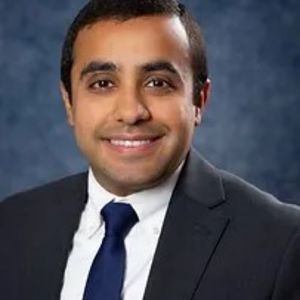
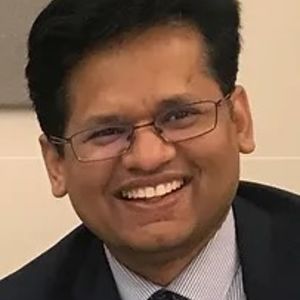
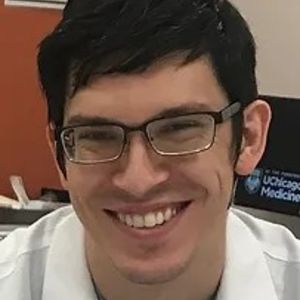
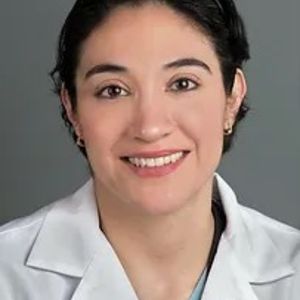
Current Transplant Surgery Fellows
Benjamin James, MD
2025-2027
Dr. James joined the Transplant Surgery Fellowship Program after completing his general surgery residency at Detroit Medical Center. He earned both his medical degree and undergraduate degree from Wayne State University in Detroit, Michigan.
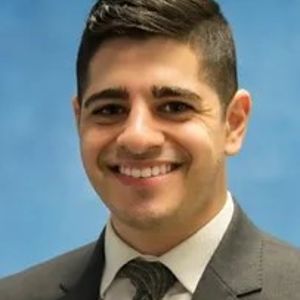
Amin Bahreini, MD
2026-2028
Dr. Bahreini completed his training in multiorgan transplantation at one of the world's busiest transplant centers in Shiraz, Iran. Following his training, he practiced as a transplant surgeon in Iran before transitioning to a role as an organ procurement specialist. He joined University of Chicago's Abdominal Transplant Surgery Fellowship to further expand his expertise and gain experience within the U.S. transplant system.
Upcoming Fellow
TBA
Previous Fellows
Joe Habbouche, MD
2024-2026
Dr. Habbouche earned his medical degree from the University of Michigan in Ann Arbor and completed his general surgery residency at Henry Ford Medical Center in Detroit, Michigan. Following his transplant surgery fellowship, he joined Corewell Health in Michigan, where he currently practices as a hepatobiliary and pancreatic surgeon in the Section of Transplant Surgery.
Alex Gaffan, MD
2023-2025
Dr. Gaffan completed his general surgery training in Israel, where he subsequently practiced as an attending general surgeon for several years. Following his transplant surgery fellowship, he returned to Israel and currently practices as a multiorgan transplant surgeon at Hadassah Medical Center in Jerusalem.
Yaser Al-Salmay MD
2021-2023
Dr. Al-Salmay joined the Transplant Surgery Fellowship Program after completing his general surgery residency at Northwell Health in Manhasset, New York. Following his fellowship, he joined the University of Louisville Medical Center, where he currently serves as a transplant surgeon and Assistant Professor of Surgery.
Kumar Jayant MD Phd
2020-2022
Following completion of his transplant surgery fellowship, Dr. Jayant joined a general surgery residency program in Florida to pursue board certification in general surgery in the United States.
Braden Juengle MD PhD
2019- 2021
Dr. Juengel is a specialist in pancreatic islet transplantation with the University of Chicago Medicine Islet Transplant Program.
Angelica Perez Gutierrez MD
2017-2019
Dr. Perez Gutierrez completed her general surgery training in Mexico City, Mexico, followed by a two-year transplant research fellowship at the University of Pittsburgh. She subsequently completed an additional year of specialized training in pancreatic islet cell transplantation. Following her fellowship training, she joined the faculty at the University of Chicago, where she continues her work in transplantation.
Ragheed Saoud MD
2018-2019
Dr. Saoud completed his urology training in Lebanon before joining the University of Chicago for a one-year fellowship in kidney and pancreas transplantation. He subsequently pursued additional fellowship training in urologic oncology and robotic surgery under Dr. Shalhav at the University of Chicago. He currently practices as an attending urologist at Northwell Health in Manhasset, New York.
Chicago is a world-class city, and is routinely ranked as one of the best places in the world to live. The campus itself is spectacular, and the hospital’s location on the main University campus allows our fellows to be immediately immersed in University life and events. The campus is a short walk from the sandy shores of Lake Michigan and a quick ride to Soldier and Wrigley Fields, Sox Park, the Lyric Opera, the Chicago Symphony, the Loop, Grant Park, the Field Museum, Navy Pier and the Shedd Aquarium. The fellows have ready access to the University libraries, gym, and other amenities associated with the campus. The Schools of Medicine, Business Law, Social Work, Public Health, and graduate programs are all on campus.
We have collected a variety of information on local arts, dining, nightlife, athletics, and outdoor recreational activity. The graduate medical education office provides information on salary, benefits, and employee health.
Three letters of recommendation, including one from current residency program director and two from surgeons who have worked with you clinically.
Please Note: All applications must be submitted using SF Match Central Application Service. Applications sent directly to the University of Chicago will not be considered.
Applications will be reviewed by our selection committee and applicants will be notified of their decision regarding an interview.
Questions regarding application requirements or submission? Contact Dedra Smith at 773-795-7624 or dedragsmith@bsd.uchicago.edu.
Application Information for Foreign Medical Graduates
To confirm your eligibility to apply for a Transplant Fellowship at the University of Chicago, clarification of citizenship, permanent residency in the U.S., or visa status is required. The University of Chicago does not sponsor clinical J visas for fellows. Therefore, foreign medical graduates who apply must be eligible for an H visa or have obtained a J waiver to be considered for a position at the University of Chicago. O-1 visas may be possible.